 US Market

Stock Activity:
ALL USD Stocks

Chat Now !

Ford Stresses ‘Fitness’ After Failing to Seize on Strong Revenue
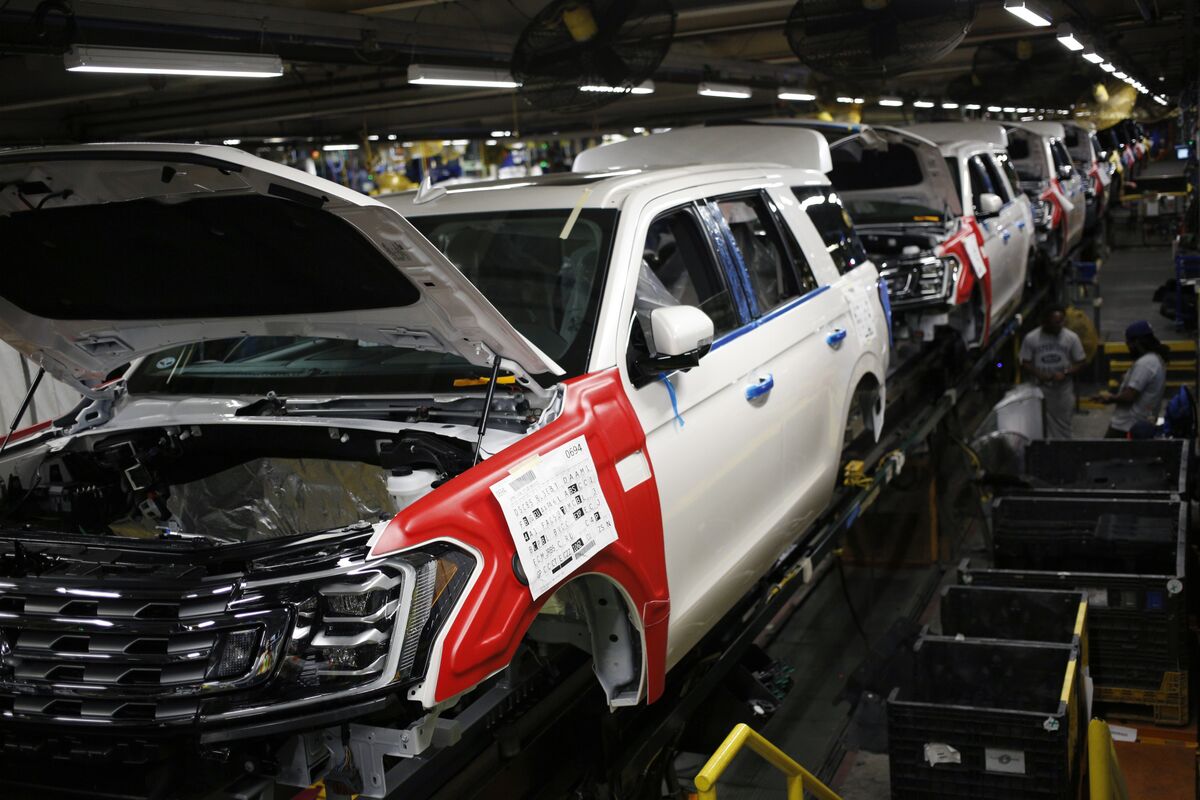
Ford Motor Co. reemphasized the need to trim costs under its new CEO as rising revenue failed to translate into profit growth to help its sinking stock.
Ford Motor Co. reemphasized the need to trim costs under its new CEO as rising revenue failed to translate into profit growth to help its sinking stock.
Automotive revenue surged to $38.5 billion in the last three months of last year, about $1.8 billion better than analysts projected. But strong sales only managed to boost earnings to a level that disappointed investors when Ford reported preliminary results last week.
The automaker has telegraphed trouble for this year, issuing a warning that profit will slip and prompting a sharp selloff that’s cost Ford about $4.2 billion in market value. Chief Executive Officer Jim Hackett has earmarked $14 billion in cost cuts over five years and has said the company will drop some car models from its lineup to focus on more lucrative sport utility vehicles and pickups.
“We are intensely focused on improving the operational fitness of our business to deliver strong results while continuing to build toward our vision of the future,” Hackett said Wednesday in a statement.
This year, Ford has said it will face a $1.6 billion headwind from rising prices of steel, aluminum and other raw materials, as well as adverse exchange rates.
On the strength of rising F-Series truck sales, Ford boosted quarterly revenue and market share in North America, yet pretax profit fell to $1.6 billion. Rising raw material and warranty costs dragged on earnings in the region -- the company warned in October that an F-Series recall would cost about $267 million.
Overseas, Ford lost money in South America, while profit declined in Europe. The company barely broke even in Asia as both sales and prices fell in China.
Wall Street Wary
Wall Street has been wary of Ford. Its profit forecast for this year reneges on former CEO Mark Field’s promise that earnings would rebound after 2017. Instead, the automaker said the rising cost of raw materials and the expense of developing autonomous and electric cars will weigh on 2018 profits.
“It was a very challenging year,” Bob Shanks, chief financial officer, told reporters Wednesday at Ford’s headquarters in Dearborn, Michigan. “It’s very, very clear that we have to improve the fitness of the company.”
Hackett, who is preparing the company for an ambitious plan to roll out robot taxis and driverless delivery vehicles by 2021, warned last week that this will be a “bad year.”
Ford shares have fallen about 8 percent since the company issued its profit warning on Jan. 16. Last year, the stock rose just 3 percent, while General Motors Co. jumped 18 percent and Tesla Inc. soared 46 percent. Fiat Chrysler Automobiles NV’s U.S.-listed shares outperformed them all, nearly doubling during 2017.
“There’s a lot of frustration,” David Whiston, a Chicago-based auto analyst with Morningstar, said before Ford released earnings. “People feel like it’s not going to get better any time soon.”