 US Market

Stock Activity:
ALL USD Stocks

Chat Now !

China Exports Remain Robust in January as Imports Surge
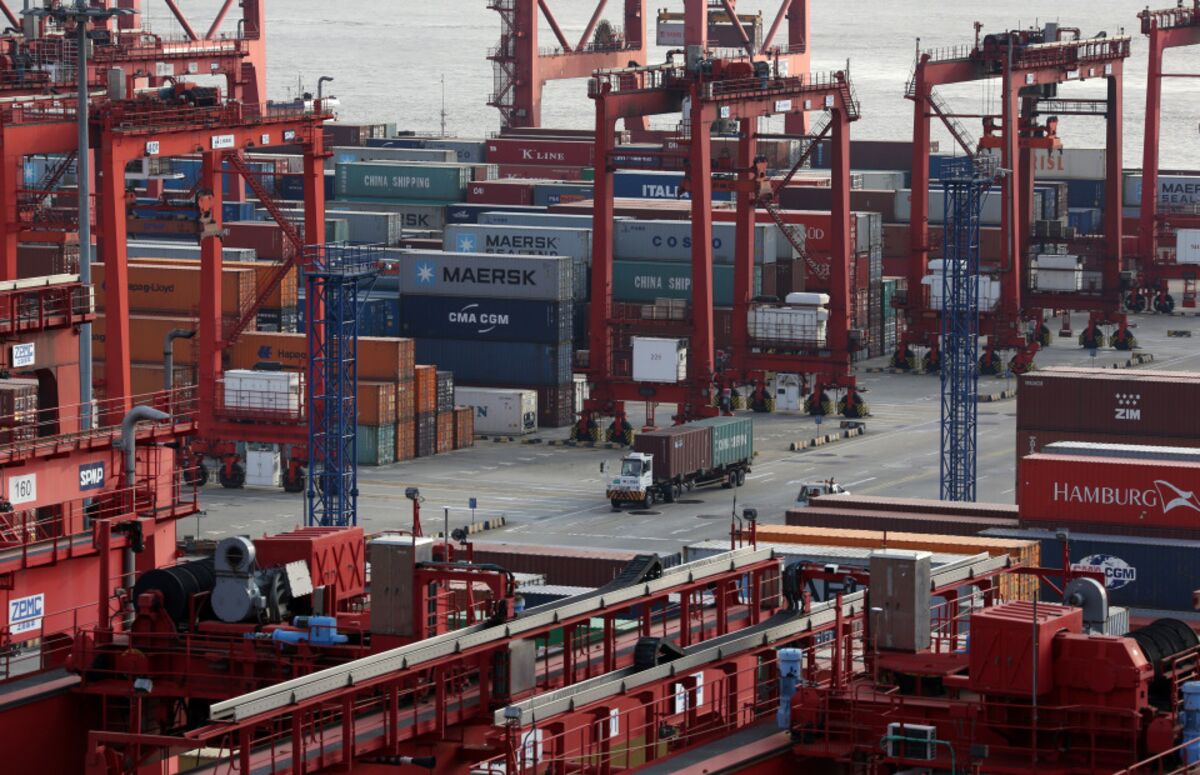
China’s overseas shipments held up despite the stronger yuan and rising trade tensions with the U.S., while import growth surged reflecting calendar effects and higher commodity prices.
China’s overseas shipments held up despite the stronger yuan and rising trade tensions with the U.S., while import growth surged reflecting calendar effects and higher commodity prices.
Key Points
- Exports rose 6.0% in January in yuan terms from a year earlier
- Imports increased 30.2%, the customs administration said Thursday
- The trade surplus stood at 135.8 billion yuan ($21.6 billion)
- Lunar New Year, which began earlier in 2017, may have distorted data
- Jan. exports to U.S. rose 7.5%; imports surged 20.5% on the year
Big Picture
External demand has remained intact amid a synchronized global expansion, helping to offset the yuan’s continued surge. Still, the world’s largest exporter faces uncertainty. Trade friction between the two biggest economies has ratcheted up recently, with China probing sorghum imports from the U.S. after the Trump administration slapped tariffs on solar panels and washers, which Beijing called a "misuse" of trade measures.
Economist Takeaways
Trade friction will likely intensify this year, but a trade war is unlikely, according to UBS Group AG economists led by Wang Tao in Hong Kong. "Targeted tariffs and restrictions may hurt related stocks or sectors, but the macro impact on China’s exports or GDP growth will be very small as a stronger global recovery helps to drive 2018 export growth," she wrote.
"China imports more from the U.S. than their shipments to the U.S. As the trade tension of the two biggest nations intensifies, this figure is timely," said Raymond Yeung, chief greater China economist for Australia & New Zealand Banking Group Ltd. in Hong Kong. "The Chinese side is expected to use this number to show their effort to narrow the trade gap."
"More working days would definitely have an impact," said Gai Xinzhe, an analyst at Bank of China’s research institute, referring to the holiday in January 2017. "Though the yuan is getting much stronger against the dollar, its overall rates against other currencies are relatively stable, which could explain why exports data are better than expected. Trade data in the first two months are extremely volatile and it’s better to look at the first quarter data for a better picture."
— With assistance by Miao Han, Enda Curran, Yinan Zhao, and Tian Chen